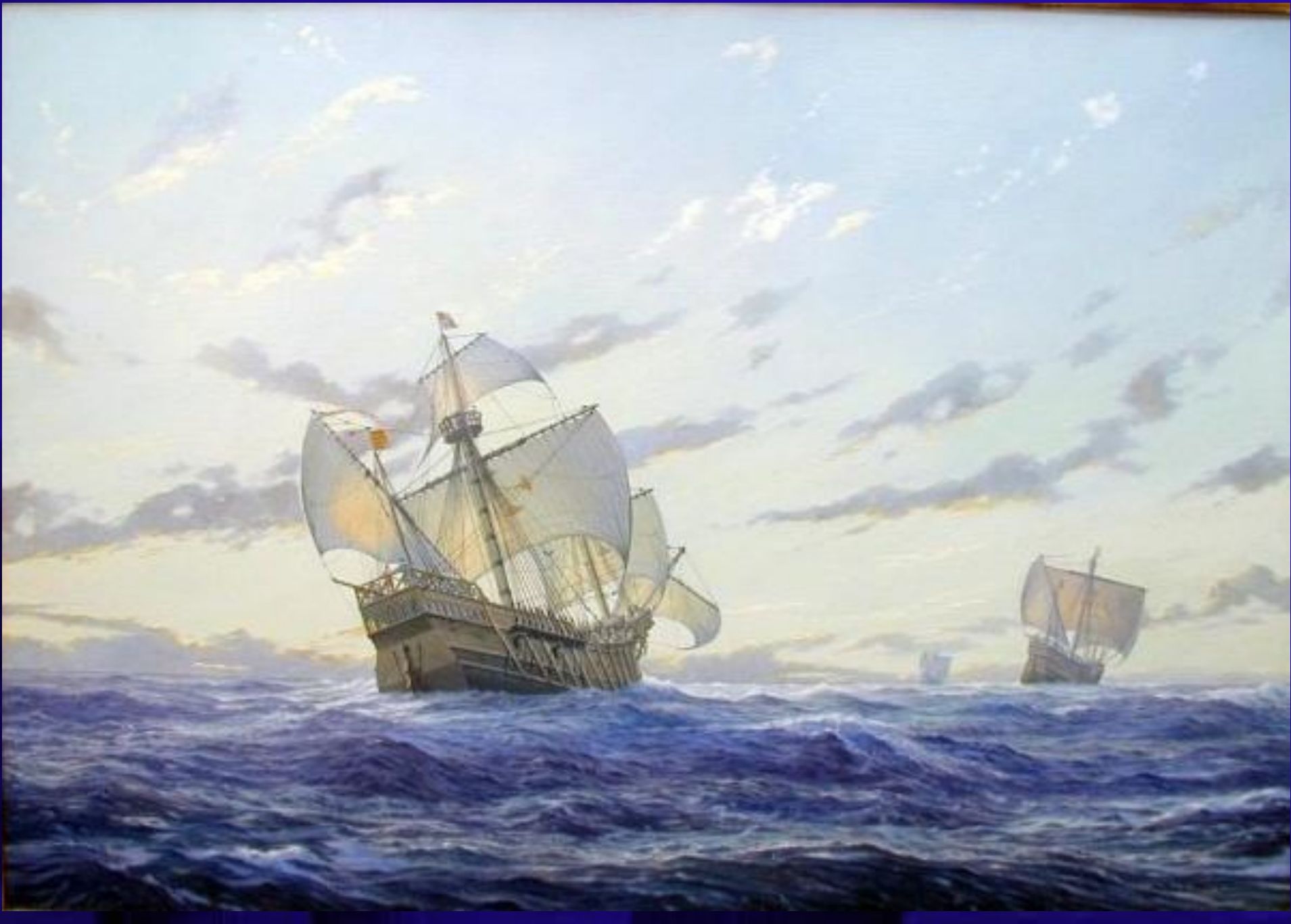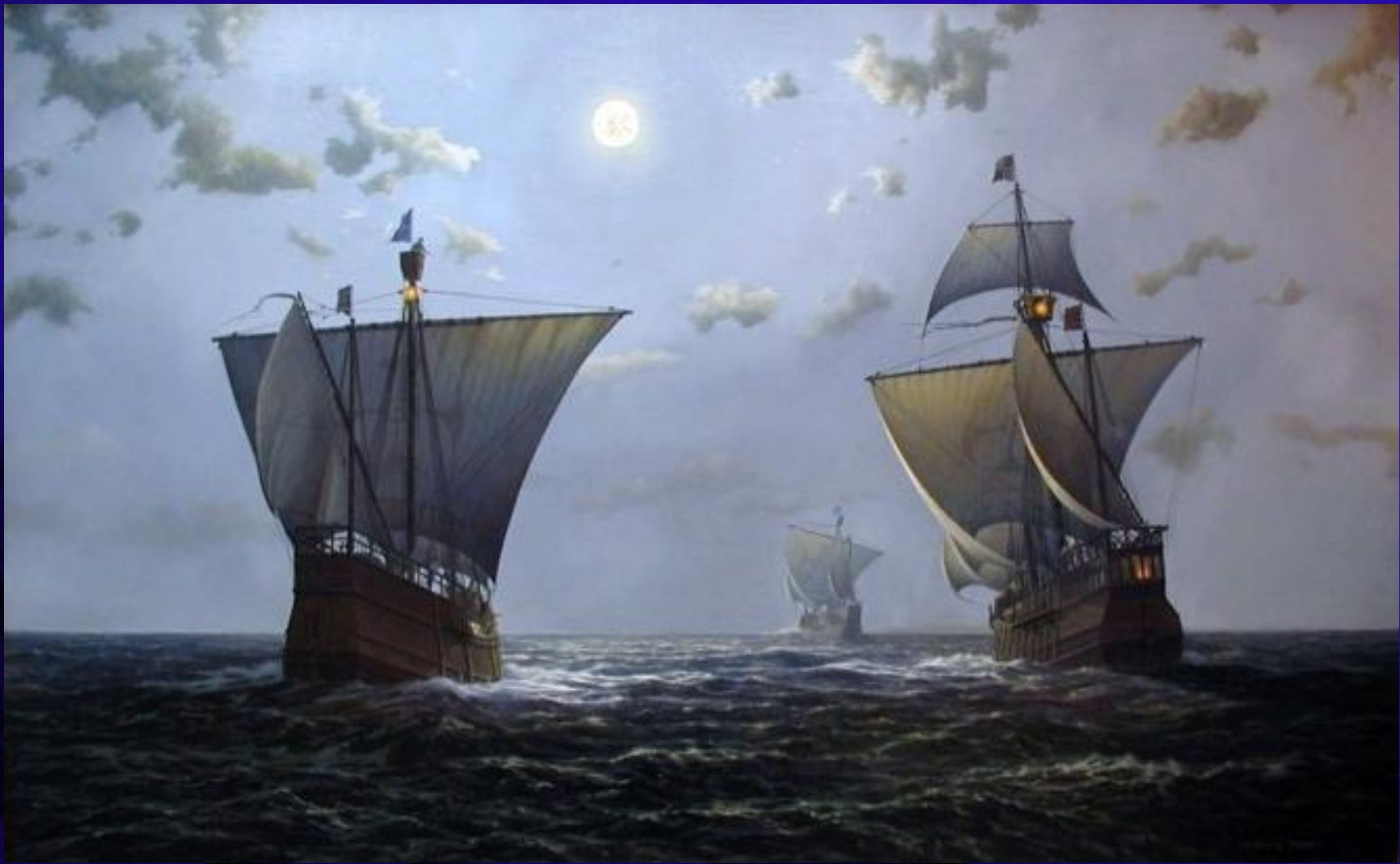
Carabelas de Colón navegando, óleo de Peter G. Power

Sala III

El primer viaje de Cristóbal Colón

Historia de tres pequeñas embarcaciones al mando del Almirante Cristóbal Colón. Seis lienzos de Peter G. Power narran la travesía que cambió el mundo, con escala decisiva en La Gomera.

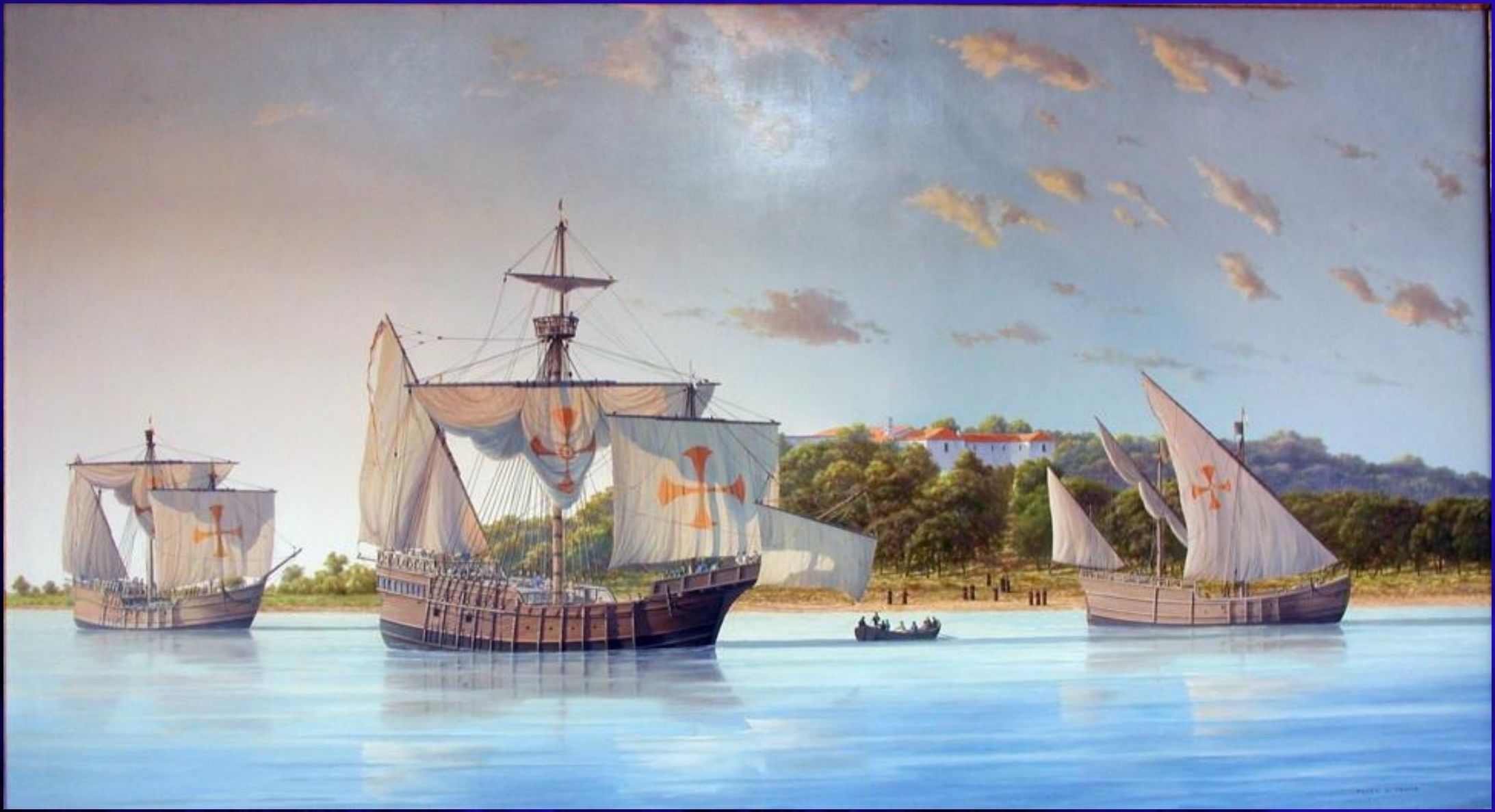
Adiós a La Rábida, óleo de Peter G. Power

3 de agosto de 1492

Adiós a La Rábida

Farewell to La Rábida · Peter G. Power · 92 × 168 cm · 36 × 66 in

Tras la financiación de los Reyes de España gracias a la intervención de Juan Pérez, monje del Monasterio de La Rábida, Colón fue nombrado Almirante y, junto con los hermanos Martín Alonso y Vicente Yáñez Pinzón, preparó tres barcos con sus respectivas tripulaciones: Santa María, Niña y Pinta. Al amanecer del viernes 3 de agosto de 1492 partieron del puerto de Palos, descendieron por el río Tinto y, junto al Monasterio de La Rábida, recogieron los vientos del océano rumbo sur, hacia las Islas Canarias.

After the Spanish Crown agreed to finance the expedition —thanks to the intervention of Juan Pérez, a friar of the Monastery of La Rábida— Columbus was appointed Admiral and, together with the brothers Martín Alonso and Vicente Yáñez Pinzón, fitted out three ships with their crews: Santa María, Niña and Pinta. At dawn on Friday, August 3rd 1492 they left the port of Palos, sailed down the river Tinto and, off the Monastery of La Rábida, caught the ocean winds heading south towards the Canary Islands.
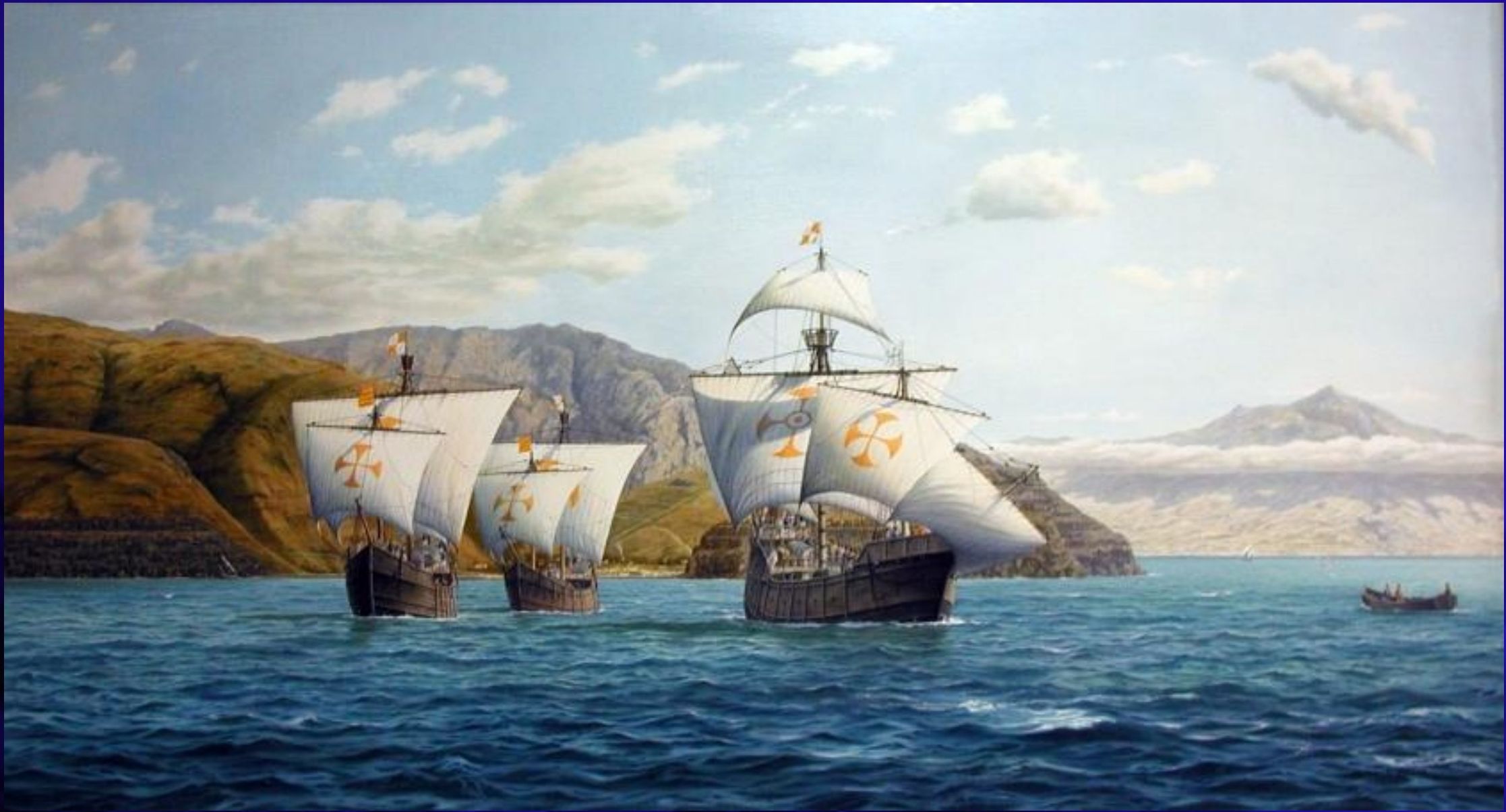
Salida desde La Gomera, óleo de Peter G. Power

6 de septiembre de 1492

Salida desde La Gomera

Departure from Gomera · Peter G. Power · 92 × 168 cm · 36 × 66 in

Colón, rumbo a las Islas Canarias, tuvo sus primeros problemas de navegación: al tercer día se desprendió el timón de la Pinta y tardaron un día entero en repararlo; al siguiente, el barco empezó a inundarse de agua. Además, las velas latinas de la Niña la hacían inestable en océano abierto. Al amanecer del 9 de agosto divisaron Gran Canaria, pero estuvieron detenidos tres días por falta de vientos. Reparada la Pinta y aparejada la Niña, los tres barcos partieron hacia La Gomera para las últimas comprobaciones. El 6 de septiembre Colón asistió a misa en la iglesia de la Asunción, antes de levar anclas por última vez en el Viejo Mundo.

Columbus had his first navigational problems while en route to the Canary Islands. The rudder of the Pinta came loose on the third day, and it took a full 24 hours to repair it. The following day was troublesome as well, since the boat began to fill with water. In addition, the lateen sails of the Niña made it unstable on the open sea. They spotted Gran Canaria at daybreak on August 9th, but couldn't approach land due to lack of winds. Once the Pinta was repaired and the Niña newly rigged, the three boats set sail for La Gomera to complete the final preparations. On September 6th, Columbus attended mass in the church of the Assumption before weighing anchor for the last time in the Old World.

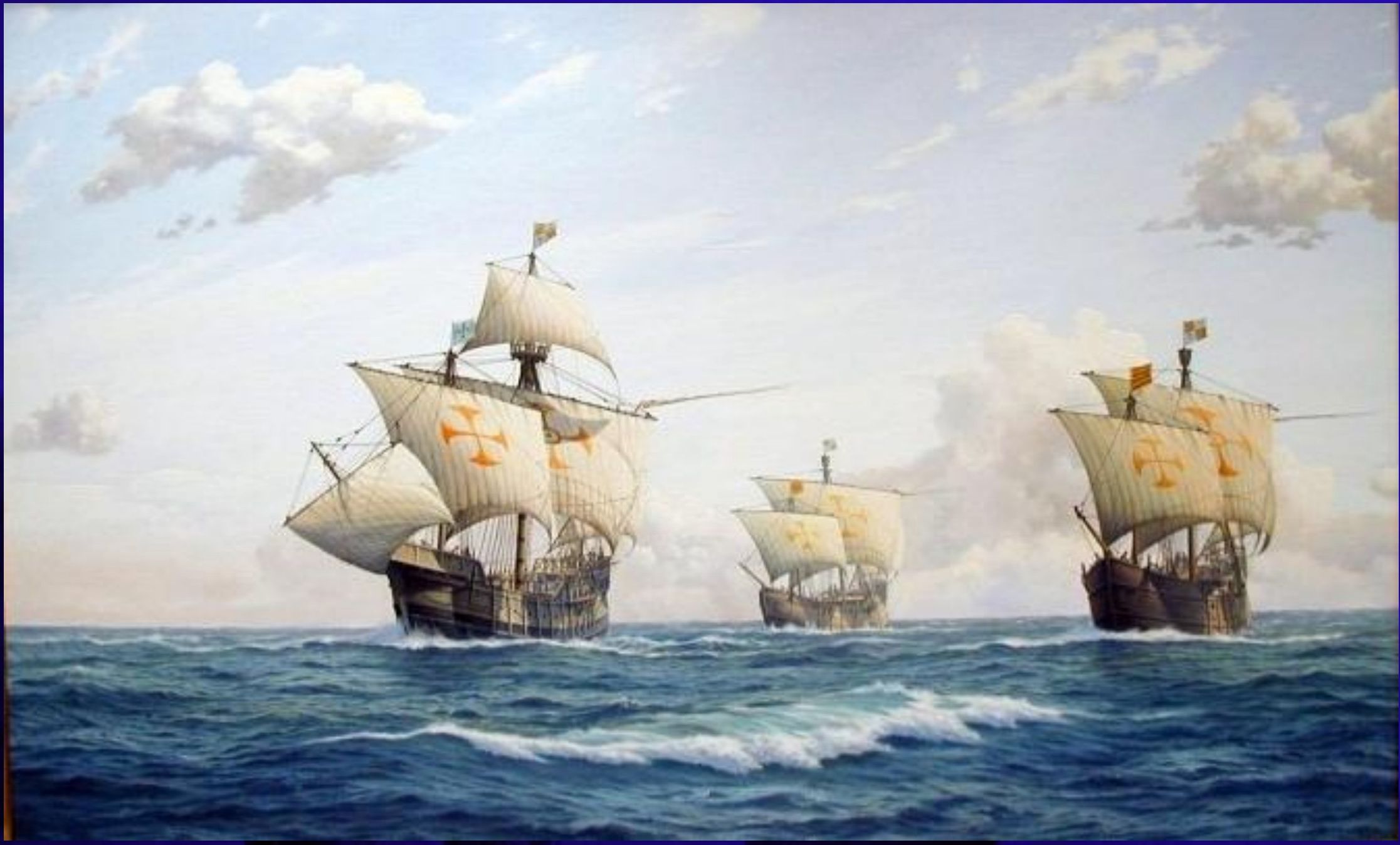
El viaje perfecto, óleo de Peter G. Power

Septiembre de 1492

El viaje perfecto

The Perfect Voyage · Peter G. Power · 76 × 122 cm · 30 × 48 in

Si la fortuna ampara al valiente, Dios sonrió a Colón: no podían haber sido mejores las condiciones de todo el viaje. Tomado el rumbo hacia el oeste al dejar las Islas Canarias, no fue necesario ajuste alguno de velas durante los primeros diez días. Colón describió el tiempo comparándolo con «el abril de Andalucía». Los tres barcos se comportaron perfectamente, navegando bastante unidos, pudiendo así los marineros gritar de barco a barco. Con la excepción de la cuarta semana de septiembre, la mínima distancia cubierta en 24 horas fue de 60 millas y la máxima de 174.

If Fortune protects the valiant, God was smiling upon Columbus. The conditions of the entire voyage could not have been better. Upon leaving the Canary Islands and sailing westward, there was no need to adjust the sails during the first ten days. Columbus described the weather comparing it with «April in Andalusia». The three ships functioned perfectly, sailing in unison so that the sailors were able to shout to each other from boat to boat. Except for the fourth week in September, the minimum distance covered in 24 hours was 60 miles, whereas the maximum was 174.

El desconocido océano, óleo de Peter G. Power

20 de septiembre de 1492

El desconocido océano

The Unchartered Ocean · Peter G. Power · 71 × 102 cm · 28 × 40 in

Los problemas surgidos durante la organización del viaje no fueron nada comparados con las dificultades que afrontarían en lo sucesivo. Un fenómeno que les preocupó, según se alejaban de las Canarias, fue el movimiento de la brújula apuntando hacia el noroeste, porque entonces se desconocía que la aguja no indica el norte geográfico, sino el magnético. El 20 de septiembre se les acabaron los vientos alisios y por primera vez tuvieron que ajustar sus velas. Después de tres semanas sin ver tierra creció el descontento hasta el punto de amotinarse; Colón impuso orden con la promesa de que si no alcanzaban tierra en tres días, pondría fin al viaje.

The initial problems were nothing in comparison to the difficulties which would soon have to be confronted. Departing from the Canaries, they discovered a new phenomenon: the compass needle pointed northwest instead of north. In those days, it was unknown that the needle doesn't indicate geographical north, rather magnetic north. On September 20th, the ships left the trade-winds and the crews had to adjust the sails for the first time. After three weeks without sight of land, the sailors began fighting among themselves and discontent turned to mutiny. Columbus established order by promising that, upon failing to reach land in three days, they would abandon the voyage and return to Spain.

Tierra, óleo de Peter G. Power

12 de octubre de 1492

Tierra

Land · Peter G. Power · 76 × 122 cm · 30 × 48 in

No debe pasar desapercibido que cuando Colón partió desde las Canarias desconocía más su destino que los hombres que pusieron pie por primera vez en la luna. La primera falsa alarma la dio Martín Alonso, de la Pinta, al ponerse el sol del 25 de septiembre: una formación de nubes les había engañado. El 7 de octubre la Niña dio la segunda falsa alarma alzando una bandera y disparando un cañón. El jueves 11 el ánimo cambió espectacularmente al multiplicarse las señales de tierra. A las dos de la madrugada del 12 de octubre, Rodrigo de Triana vio una luz procedente de la tierra y exclamó: «¡Tierra!, ¡tierra!».

One mustn't forget that when Columbus left the Canary Islands, he knew less about his destination than the men who first set foot on the moon. The first false alarm was sounded by Martín Alonso of the Pinta at sunset on September 25th: a cloud formation had deceived them. By dawn on October 7th, the Niña sounded the second false alarm by hoisting a flag and firing a cannon. On Thursday, October 11th, the crews' morale improved dramatically due to frequent signs of land. At 2 o'clock on the morning of October 12th, Rodrigo Triana spotted a light coming from land and shouted "Land! Land!". The Discovery was about to begin.

América descubierta, óleo de Peter G. Power

12 de octubre de 1492

América descubierta

America Discovered · Peter G. Power · 92 × 168 cm · 36 × 66 in

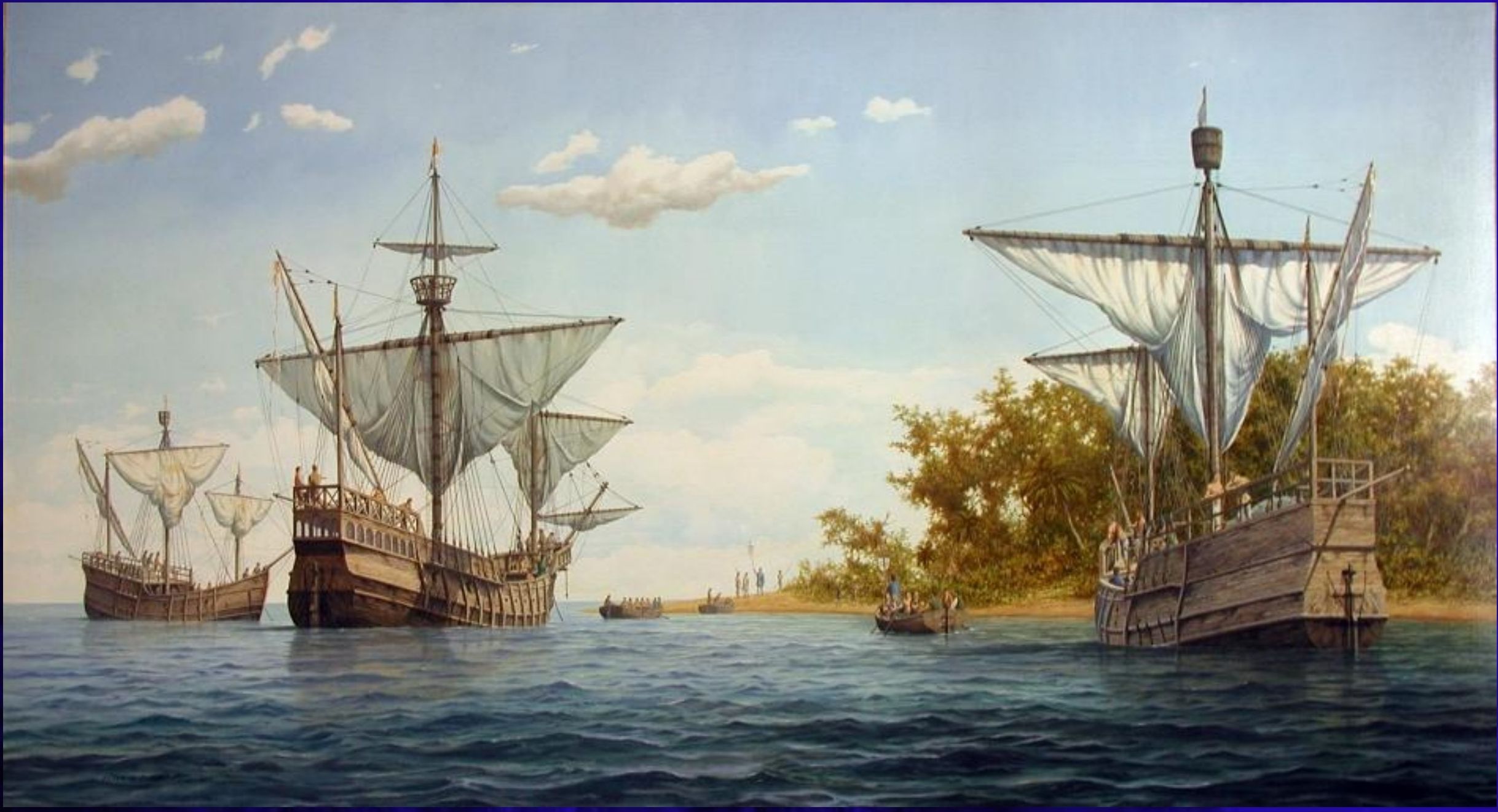
Habiéndose establecido fuera de toda duda que había tierra a unas seis millas, Colón ordenó recoger todas las velas menos las de curso y relajarse el resto de la noche. Al romper el día, desde el suroeste de la isla, exploraron en busca de una apertura por donde salvar la barrera de arrecife. Bordeando lo que hoy se llama Reef Gardiner, las carabelas entraron en una bahía de poca profundidad, hoy Fernández o Long Bay, donde pudieron anclar y lanzar sus botes. Colón desembarcó junto a Martín Alonso Pinzón y Vicente Yáñez Pinzón, todos con el estandarte de la expedición; al tomar tierra se arrodillaron y dieron gracias a Dios, y Colón nombró la isla San Salvador.

Having established beyond any doubt that land was at an approximate distance of six miles, Columbus ordered the crews to take in all sails except those which kept course, and to relax for the rest of the night. At daybreak, approaching the island from the southwest, the ships searched for a passage through the barrier reef. Passing what is now called the Gardiner Reef, the vessels entered a shallow bay known today as Fernández or Long Bay, where they dropped anchor and launched the landing boats. Columbus went ashore with Martín Alonso Pinzón and Vicente Yáñez Pinzón, all carrying the banner of the expedition. Upon touching land they knelt and gave thanks to God, and Columbus named the island San Salvador.